
 What Is Jewel Count in a Pocket Watch?
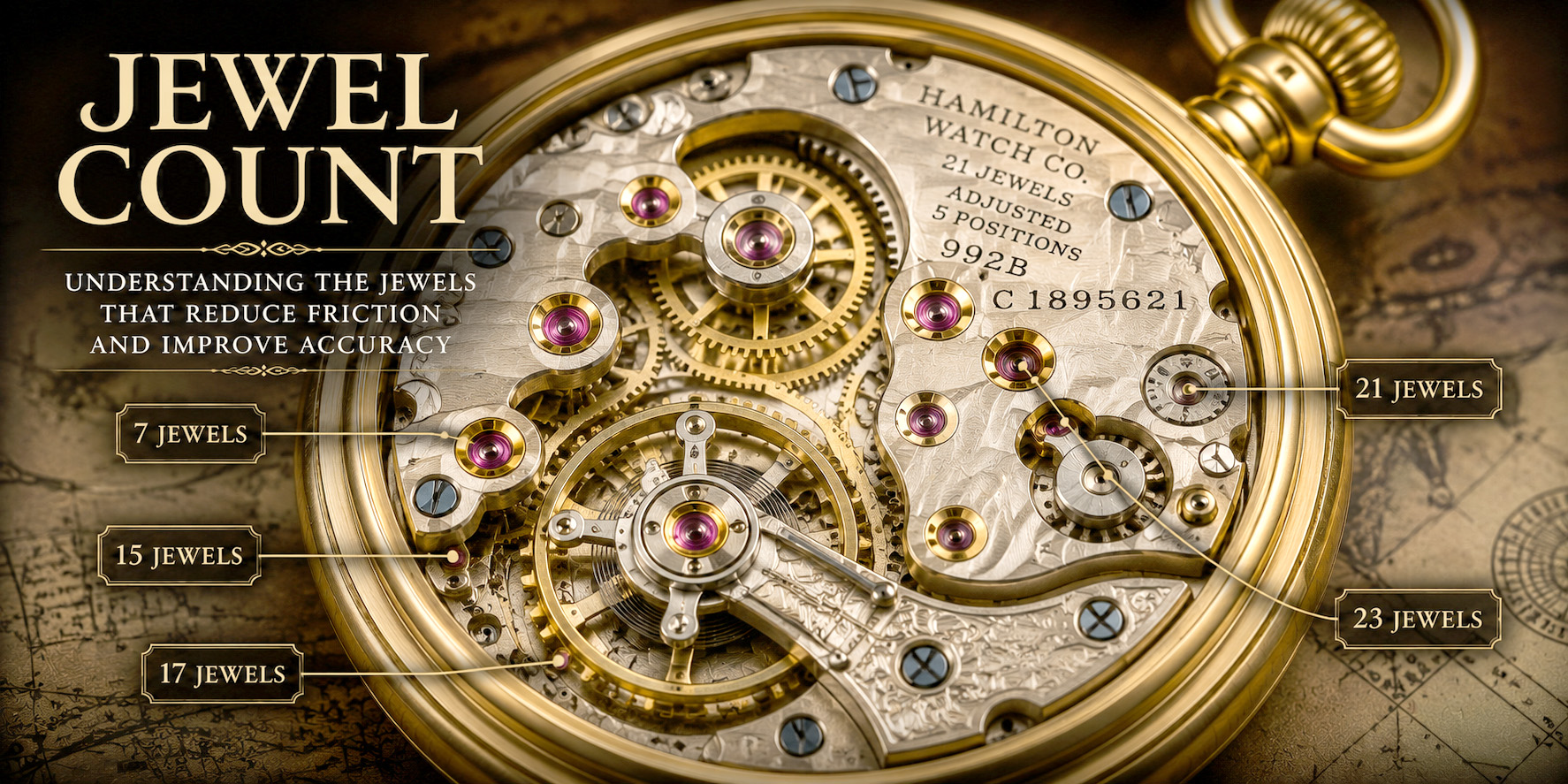
A jewel count refers to the number of synthetic or natural jewels used within a watch movement. These jewels serve as low-friction bearings for the pivots of moving parts, reducing wear and improving long-term accuracy. Jewel count became an important indicator of movement quality in both pocket watches and wristwatches.
Why Are Jewels Used in Watch Movements?
Watch jewels are typically made from synthetic ruby or sapphire and are placed at points where friction occurs. Because these materials are extremely hard and wear-resistant, they help protect delicate movement components and improve performance.
- Reduce friction between moving parts.
- Minimize wear on pivots and bearings.
- Improve long-term accuracy.
- Increase movement longevity.
- Reduce maintenance requirements.
Common Pocket Watch Jewel Counts
The number of jewels in a movement often reflects its intended quality and purpose.
| Jewel Count | Typical Use |
|---|---|
| 7 Jewels | Basic utility movements |
| 11–15 Jewels | Mid-grade watches |
| 17 Jewels | High-grade movements |
| 19–21 Jewels | Railroad-grade watches |
| 23+ Jewels | Premium and specialty movements |
Does More Jewels Mean a Better Watch?
Generally, additional jewels can improve durability and efficiency when they are placed at functional friction points. However, jewel count alone does not determine the quality of a watch. Factors such as movement design, adjustment, finishing, and overall construction are equally important.
Many of the finest American railroad pocket watches were produced with 19, 21, or 23 jewels, although some exceptional movements contained even more.
Jewel Count and Railroad Watches
Railroad-grade pocket watches often featured higher jewel counts because railroad service demanded exceptional reliability and accuracy. Manufacturers such as Hamilton, Elgin, Illinois, Waltham, and Ball commonly produced movements with 19, 21, or 23 jewels to meet strict railroad standards.
Collector Interest
Collectors often consider jewel count when evaluating a pocket watch, but it is only one factor among many. Condition, originality, manufacturer, movement grade, railroad approval, and overall rarity generally have a greater impact on value.
Conclusion
Jewel count refers to the number of jeweled bearings used within a watch movement to reduce friction and wear. While higher jewel counts often indicate a higher-grade movement, collectors should evaluate the complete watch rather than relying solely on jewel count.
Continue Exploring